
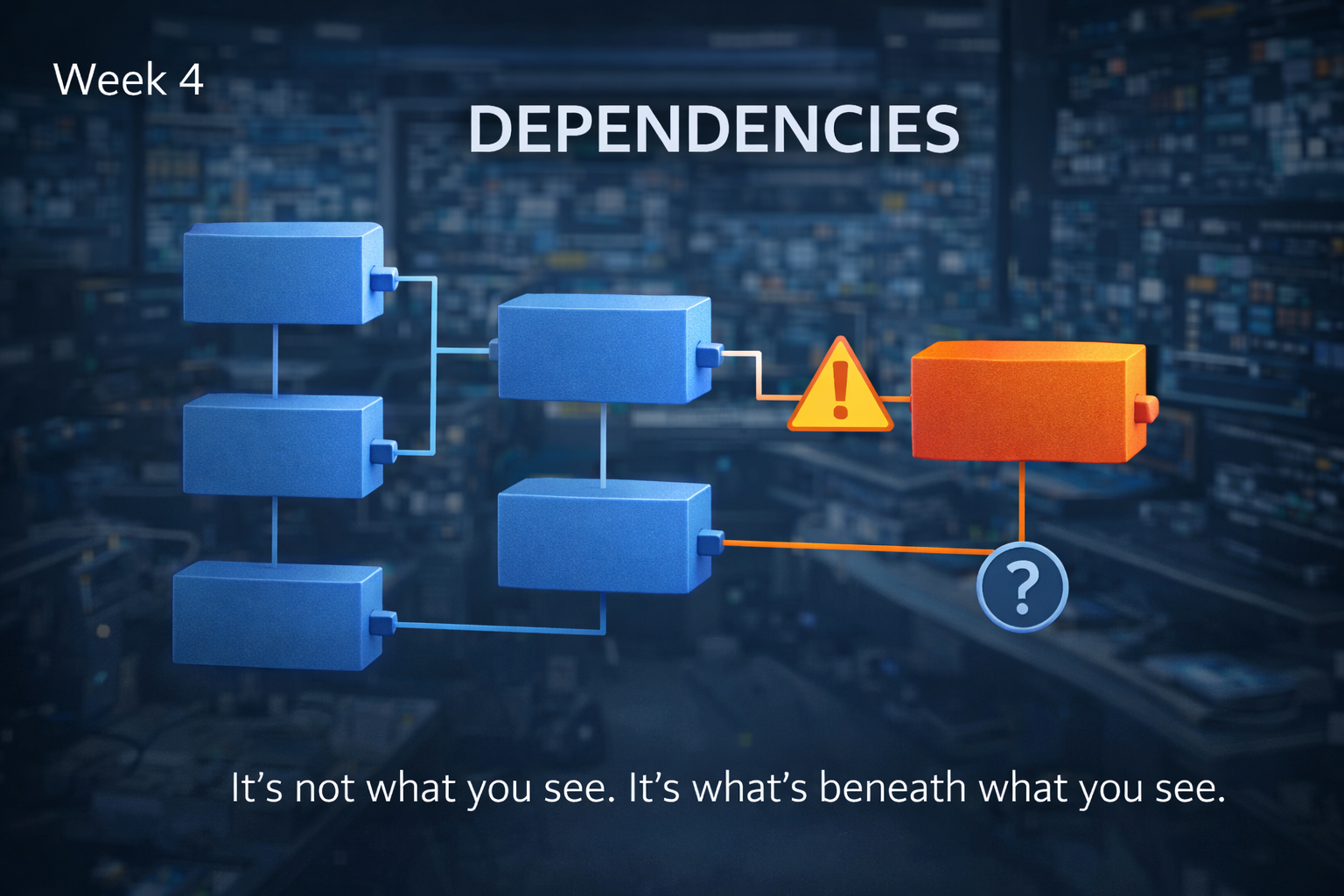
Most disruptions don’t begin where they appear.
In complex systems, the visible failure is usually the final link in a much longer chain — the point where accumulated drift finally becomes impossible to ignore.
In live broadcast environments, for example, a playout interruption may look like a technical malfunction.
But often the origin sits upstream:
Metadata entered incorrectly hours earlier
An automation rule built on an outdated assumption
A handoff that lacked clarity between shifts
A timing dependency that was never fully verified
The visible error isn’t the cause.
It’s the outcome.
Every time-critical system operates on layers of dependency.
Automation depends on clean inputs.
Clean inputs depend on defined ownership.
Ownership depends on clarity of process.
Process depends on discipline.
When one layer drifts quietly, the system absorbs it — at first.
Small inaccuracies get tolerated.
Assumptions go unchallenged.
Compensation becomes routine.
Until capacity runs out.
Experienced operators understand this pattern. They don’t just respond to incidents. They trace dependencies.
Instead of asking:
“What broke?”
They ask:
“What was this relying on?”
“What assumptions were built into it?”
“What upstream condition changed?”
That shift in questioning changes how stability is built.
Because reliability isn’t about eliminating pressure.
Pressure is constant.
Reliability is about making dependencies visible before pressure exposes them.
In high-stakes environments, speed doesn’t create stability.
Clarity does.
And clarity begins with understanding what touches what — long before anything fails.